
Let’s Talk Hormone Health
Your hormones regulate almost everything.
A clear, science-backed guide to understanding what hormones do, what disrupts them, and the simple daily habits that help them function at every stage of life.
4 questions most people ask first:
Chemical messengers produced by glands throughout your body. They regulate metabolism, sleep, mood, immune function, fertility, energy, and dozens of other biological processes. When in balance, most systems function well. When disrupted, the effects ripple broadly.
❋ What are hormones, exactly?Fatigue that doesn't resolve with rest. Mood changes that feel disproportionate. Weight shifts despite no changes in diet or exercise. Brain fog. Poor sleep. Low libido. Skin changes. Irregular cycles. Often dismissed as stress or aging — frequently, they are hormonal signals.
❋ What does hormone disruption feel like?Yes. Many personal care products contain chemicals that can be absorbed through skin and interfere with the body's hormonal signaling. This was the founding insight of Hugh & Grace, confirmed by their fertility physician during IVF treatment and supported by UC Berkeley's HERMOSA Study.
❋ Can what I put on my skin affect my hormones?No. Hormones regulate health in every body. Men experience gradual testosterone decline from their 30s onward, and EDC exposure accelerates this. Thyroid dysfunction, cortisol dysregulation, and insulin resistance affect men and women significantly. Hormone health is everyone's issue.
❋ Is hormone health only a women's issue?There are many different hormones that each play a significant role in our body. Here are just a few:
Estrogen, a sex hormone that Regulates the menstrual cycle, bone density, cardiovascular function, skin elasticity, and brain health. Declining estrogen during perimenopause affects metabolism, insulin sensitivity, and sleep. In men, elevated estrogen from EDC exposure or excess body fat contributes to low energy and reduced muscle mass.
Progesterone, a sex hormone has a calming, grounding effect. Supports sleep quality, reduces inflammation, and regulates the nervous system. Low progesterone is associated with anxiety, irritability, PMS symptoms, and disrupted sleep, often before perimenopause becomes clinically apparent.
Testosterone, a sex hormone Essential in all bodies for energy, muscle maintenance, metabolism, motivation, and libido. In men, testosterone declines approximately 1% per year after age 30. In women, it plays a critical role in energy and sexual health. EDC exposure, chronic stress, and poor sleep all suppress testosterone production.
Cortisol, a stress hormone that is essential in short bursts but damaging when chronically elevated. High cortisol suppresses thyroid hormone, testosterone, and progesterone, raises blood sugar, promotes abdominal fat, and weakens immune function. Managing the stress response is foundational to every other aspect of hormone health.
Insulin, a metabolic hormone that moves glucose from the bloodstream into cells for energy. When cells become resistant to insulin, driven by stress, poor sleep, processed food, and EDC exposure, the body stores more fat. Insulin resistance is a root driver of PCOS, type 2 diabetes, and weight that does not respond to diet changes.
Thyroid hormones are metabolic regulators that regulate energy production, body temperature, digestion, and mood. Highly sensitive to EDC exposure, nutrient deficiency, and chronic stress. An estimated 20 million Americans have thyroid dysfunction, and up to 60% are undiagnosed.
Melatonin, a sleep hormone that regulates the sleep-wake cycle and signals the body to repair during nighttime hours. Also plays a supporting role in estrogen, testosterone, and cortisol regulation. Blue light from screens before bed suppresses melatonin production, one of the most common and correctable hormone disruptors in modern life.

What your hormones do, and why it matters
Hormones are produced by glands throughout the endocrine system and released into the bloodstream to reach cells throughout the body. Each hormone binds to specific receptors on cells, triggering precise biological responses. The system operates at extraordinarily small concentrations, which is also what makes it vulnerable when external chemicals interfere.

Your body holds the story—healing begins when you gently turn toward it.

The four primary hormone disruptors
1. Chronic stress
Sustained elevated cortisol suppresses sex hormones and thyroid hormones, raises blood sugar, disrupts sleep, and creates a cascade of downstream effects. The stress response evolved for short-term threats, not the sustained, low-grade stress of modern professional and personal life.
2. Poor sleep quality
Sleep is when the endocrine system performs its most important maintenance. One week of sleeping five hours per night reduces testosterone levels in men by 10-15% (Leproult & Van Cauter, JAMA, 2011). Women with irregular sleep patterns are three times more likely to develop metabolic syndrome.
3. Nutritional gaps
Hormones are synthesized from nutrients. Vitamin D3 functions like a hormone and is essential for estrogen regulation. Magnesium supports cortisol regulation and sleep. Fiber supports estrogen clearance through the gut. Adequate protein provides amino acid building blocks for hormone synthesis.
4. Endocrine-disrupting chemicals
Chemicals in many personal care and household products interfere with the body's hormonal signaling by mimicking hormones, blocking receptors, or altering hormone metabolism. The average woman encounters more than 160 such chemicals daily through 12 personal care products alone.

Wanna learn more:
Six daily habits with the strongest evidence base
01
Protect your sleep, 7 to 9 hours, consistentlySleep is the most powerful hormone-regulating behavior available to you. Consistent sleep and wake times calibrate cortisol, melatonin, growth hormone, and testosterone more effectively than any supplement.
02
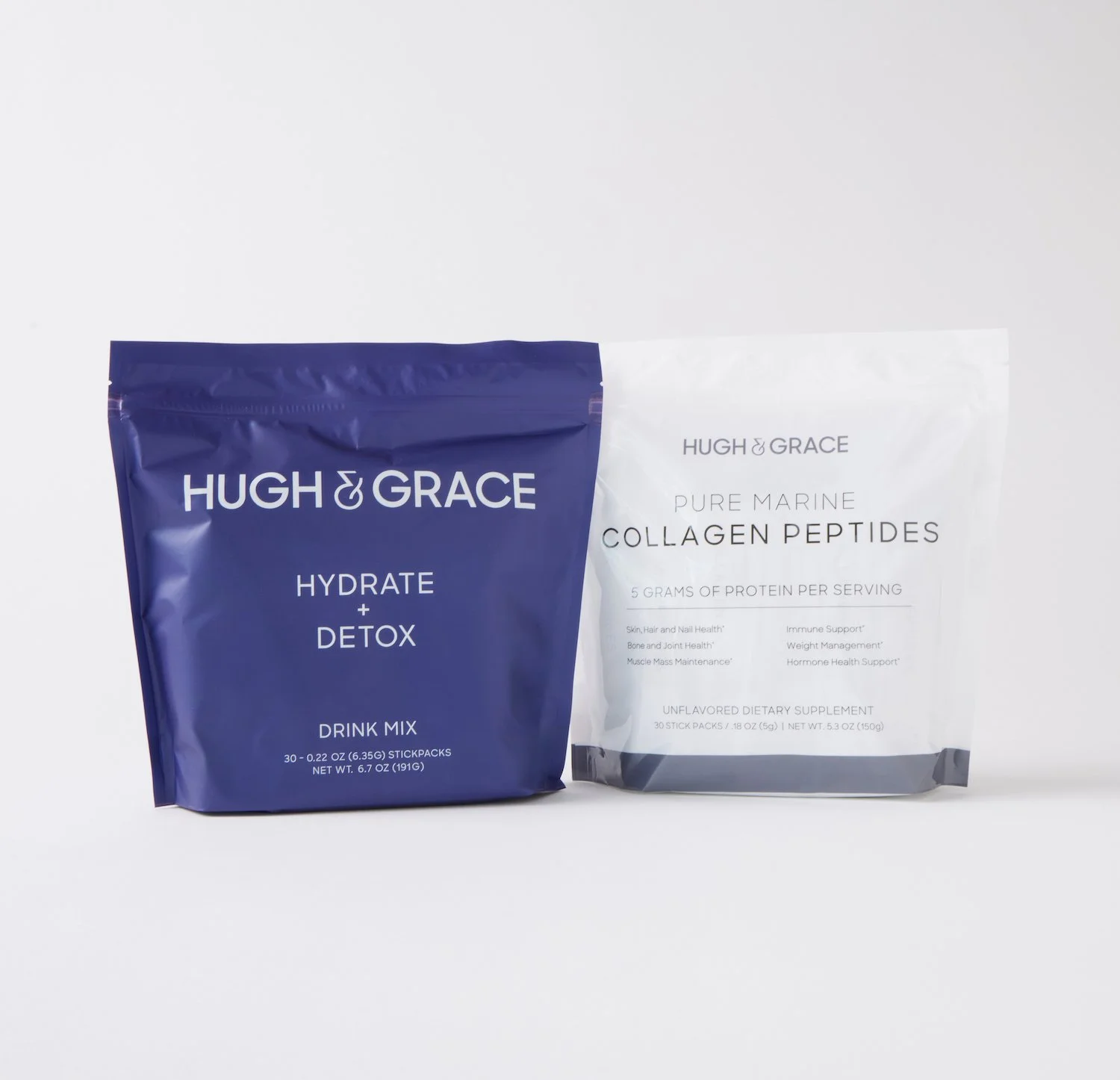
Hydrate before caffeine, with electrolytesOvernight, you lose fluid and electrolytes essential for adrenal function. Rehydrating before your first caffeine intake helps stabilize your morning hormonal baseline. Hydrate + Detox was specifically formulated for this morning window.
03
Eat adequate protein at breakfastProtein stabilizes blood sugar, which stabilizes cortisol and insulin. 20-30 grams of protein within the first hour of waking supports stable energy and reduces the cortisol spike that a carbohydrate-only breakfast amplifies.
04
Include strength training two to three times per weekResistance training is one of the most effective interventions for testosterone support, insulin sensitivity, and growth hormone production, producing a hormonal response that supports metabolic health and muscle preservation.
05
Eat fiber with every mealFiber supports estrogen clearance through the gut. Soluble fiber also slows glucose absorption, supporting insulin sensitivity. Leafy greens, cruciferous vegetables, beans, and seeds are the most efficient sources.
06
Audit your daily product exposureThe personal care and home products you use daily represent one of the most consistent and controllable sources of hormonal chemical exposure in your life. The UC Berkeley HERMOSA Study demonstrated that switching products can reduce measurable chemical levels by 27-45% within just three days.

Signs that your hormones may need more support
These experiences are common — but they are not inevitable. Many are signals from a hormonal system asking for better inputs.
Common signs in women
Fatigue that does not resolve with adequate sleep
Irregular, heavy, or painful menstrual cycles
Mood swings that feel disproportionate
Weight changes, particularly abdominal, without diet changes
Brain fog or difficulty concentrating
Low libido or changes in sexual health
Skin breakouts in adulthood, around the jaw
Hair thinning or changes in hair texture
Difficulty falling or staying asleep
Common signs in men
Decreased energy and stamina
Reduced motivation or drive
Difficulty maintaining or building muscle mass
Increased body fat, particularly abdominal
Irritability, low mood, or reduced confidence
Reduced libido or changes in sexual function
Brain fog or reduced cognitive sharpness
Poor sleep quality or slow recovery from exercise
Increased sensitivity to stress
“In the quiet moments you listen to your body, you begin to find your way back to yourself.
Whole Body Wellness
Are you also looking for wellness for the whole body? I have partnered with a wellness company that focuses on hormone health with elevated products that improve your skin, health, and home. Hugh and Grace was created to fill a void in the hormone health market. We offer you products and information that we needed but couldn’t find anywhere. Ben and Sara Jensen founded the brand after their 14 year struggle with unexplained infertility , where they learned the significant importance of whole-body hormone health. Ben and Sara are disrupting an industry to create products that will work WITH our bodies and help to regulate and protect our hormones.
Healthy hormones are the foundation for your physical health, mental health, and physical appearance. Your hormones control EVERYTHING in your body including physical health, appearance, immune function, mood, mental health, sexual health, libido, puberty, reproduction, menopause, metabolism and weight, and sleep patterns. The hormones are our bodies messenger system, they tell our organs how to operate. When disrupted by endocrine disrupting chemicals that are found all around us and in products we use everyday it is known to cause things like cancer, diabetes, premature puberty, lack of sleep, skin irregularities, mental health struggles, irritability, viruses, diseases, etc. Want to know more? Click on the link below and start your journey of paying attention to the hormones.


SOURCES & CITATIONS
Leproult, R. & Van Cauter, E. (2011). Effect of 1 week of sleep restriction on testosterone levels.JAMA, 305(21), 2173-2174.doi:10.1001/jama.2011.710
American Thyroid Association. Thyroid facts.thyroid.org · Deswal, R. et al. (2020). Prevalence of PCOS.Journal of Human Reproductive Sciences, 13(4). PMID: 33627974
Endocrine Society. EDC exposure costs billions.endocrine.org
Zota, A.R. et al. (2016). HERMOSA Intervention Study.Environmental Health Perspectives, 124(10).doi:10.1289/ehp.1510514